Address Phone Book: Strategic Asset Management for Amazon KDP Publishers
In the competitive landscape of low-content publishing on Amazon KDP, success is rarely defined by a single upload. It is defined by the strategic selection of assets that balance market demand with technical precision. For publishers targeting the organization and stationery niche, a high-quality Address Phone Book interior serves as more than just a product; it is a foundational element of a broader portfolio strategy. Understanding the specific utility, technical requirements, and market positioning of a 6x9 inch interior with bleed is essential for creators who want to move beyond saturation and build a sustainable publishing business.
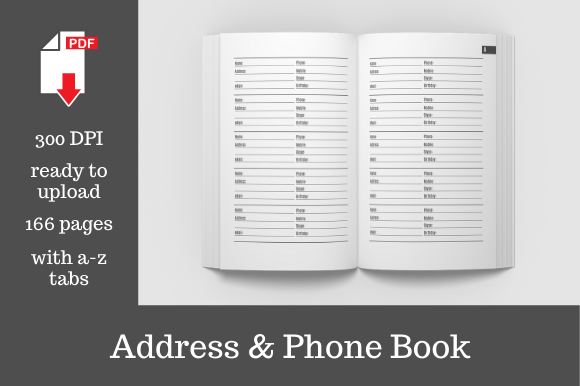
The digital asset described here—a ready-to-upload PDF featuring 166 pages, alphabetical tabs, and dedicated birthday tracking—is designed to solve specific friction points for both the publisher and the end-user. However, leveraging this asset effectively requires shifting perspective from simple file uploading to intentional product development. This approach ensures that every listing contributes to long-term brand equity rather than adding noise to an already crowded marketplace.
Technical Precision as a Competitive Advantage
The most immediate value proposition of this specific Address Phone Book interior is its adherence to strict KDP technical standards. The specification of "bleed" is not merely a formatting detail; it is a critical quality indicator that separates professional publications from amateur attempts. Bleed allows design elements, such as the A-Z alphabetical tabs included in this template, to extend to the very edge of the page without leaving unprinted white borders. For a 6x9 inch trim size, which is the industry standard for portable address books, proper bleed setup prevents rejection during the review process and ensures the physical book meets customer expectations upon delivery.
Publishers often underestimate the time cost of troubleshooting margin errors or tab alignment issues. By utilizing a pre-tested, error-free interior with 166 total pages, you eliminate the variable of technical failure. This reliability allows you to focus resources on external factors that actually drive sales, such as keyword research, cover design differentiation, and advertising strategy. In operational terms, this asset reduces your time-to-market and lowers the risk of negative reviews stemming from printing defects.
Understanding the Interior Architecture
Strategic product selection involves analyzing whether an interior’s structure matches user behavior. This template offers five pages per letter, accommodating approximately 25 contacts per section. This density is significant because it addresses a common pain point in generic address books: insufficient space for popular letters like S, M, or B, while wasting paper on X or Z. While this template uses a standardized allocation, understanding this limitation helps in positioning. It is ideal for personal use, small business networking, or specific niche communities where contact lists are moderate in size.
The inclusion of extra pages for birthdays transforms this from a static directory into a dynamic relationship management tool. For marketers and entrepreneurs creating products for niches like real estate, insurance, or community leadership, this feature adds tangible utility. It encourages recurring engagement, making the book a daily reference rather than a shelf ornament. When writing your book description and backend keywords, highlighting this dual functionality can improve conversion rates by appealing to buyers seeking comprehensive organization solutions.
Strategic Positioning Within a Low-Content Portfolio
An Address Phone Book should not exist in isolation. Experienced publishers understand that individual SKUs perform better when they support a cohesive brand identity. Before uploading this interior, consider how it fits into your existing catalog. Does the 6x9 form factor match your other planners, journals, or logbooks? Consistency in trim size creates cross-selling opportunities and establishes visual recognition on your author page.
Furthermore, the "ready-to-upload" nature of this file allows for rapid iteration. If you are testing multiple niches, this standardized interior enables you to launch variations quickly. You might create one version targeting seniors with large-print covers, another for wedding planners, and a third for small business owners. The interior remains constant, but the packaging and metadata shift to address distinct audience needs. This modular approach maximizes the return on investment for a single high-quality asset.
Audience Alignment and Use Case Validation
Not every audience requires a physical address book in the digital age. Strategic publishing requires identifying segments where analog organization still holds superior value. Consider the following high-intent user groups:
- Privacy-Conscious Professionals: Individuals who prefer keeping sensitive client data offline and secure from cloud breaches.
- Older Demographics: Users who find tactile navigation faster and more reliable than smartphone apps.
- Niche Hobbyists: Collectors, club members, or volunteers who maintain specialized directories unrelated to their primary digital contacts.
- Gift Buyers: Seasonal shoppers looking for practical, thoughtful gifts for parents, grandparents, or new homeowners.
Validating these use cases before launch prevents wasted ad spend. If your research indicates a decline in demand for general address books but a spike in "caregiver communication logs" or "family reunion planners," adapt your marketing angle accordingly. The interior supports these narratives, but only if your metadata connects the dots for the buyer.
Risk Mitigation and Intentional Deployment
While this Address Phone Book interior is technically sound, relying on it without context introduces strategic risks. The primary danger in low-content publishing is commoditization. Because this is a ready-to-upload file, other publishers may have access to identical or similar interiors. If you upload this PDF with a generic cover and broad keywords, you enter a race to the bottom on price and visibility.
To mitigate this, you must add unique value through external differentiation. Your cover design must be custom and professionally executed. Your book description should articulate specific benefits rather than listing features. Your keyword strategy should target long-tail phrases with lower competition rather than head terms like "address book." Treat the interior as a canvas, not the final masterpiece.
Evaluating Opportunity Cost
Before committing to this asset, assess whether a 6x9 inch, 166-page format aligns with current market signals. Analyze best-seller ranks (BSR) of comparable titles. Are customers buying 6x9 books, or is there a trend toward larger 8.5x11 formats for desk use? Is the 166-page count perceived as substantial value, or do reviews suggest users prefer thinner, lighter options? Data-driven decision-making prevents you from forcing a square peg into a round hole. If the market has shifted, even a flawless interior will fail to generate meaningful revenue.
Additionally, consider the seasonality of this product category. Address books often see demand spikes during Q4 (holiday gifting) and January (New Year organization). Uploading in March without a specific seasonal hook may result in dormant inventory. Align your launch schedule with peak intent periods to maximize initial velocity and algorithmic favorability.
Operational Excellence and Long-Term Value
Sustainable KDP businesses are built on systems, not luck. Integrating this Address Phone Book interior into your workflow should streamline operations, not complicate them. Maintain a version control system for your interiors. Even though this file is KDP tested, Amazon occasionally updates trim size tolerances or bleed requirements. Keeping a master file and documenting any modifications ensures you can quickly adapt to platform changes without starting from scratch.
Track performance metrics specifically for this interior type. Compare conversion rates against your other products. Does the inclusion of birthday pages correlate with higher customer satisfaction or better reviews? Use this feedback loop to inform future product development. Perhaps your next iteration needs four pages per letter instead of five, or additional notes sections. Treating each upload as a learning opportunity compounds your expertise over time.
Ethical and Quality Considerations
Finally, maintain integrity in your publishing practices. Ensure that any claims made in your listing accurately reflect the interior contents. If the book contains 25 contacts per letter, do not advertise "unlimited space." Misleading customers damages trust and invites returns. High-quality, honest listings build a loyal readership and protect your account health. In an era where AI-generated content and automated uploads are flooding the marketplace, human curation and attention to detail remain powerful differentiators.
This Address Phone Book interior represents a strategic tool for publishers who value efficiency and quality. By understanding its technical specifications, aligning it with validated audience needs, and deploying it within a broader brand strategy, you transform a simple PDF into a viable business asset. Success on Amazon KDP is not about finding a magic file; it is about making better decisions, executing with precision, and consistently delivering value to specific customers. Approach this asset with intention, and it will serve as a reliable component of your publishing ecosystem.