Contacts Log Book KDP Interior: 6x9 Layout Guide
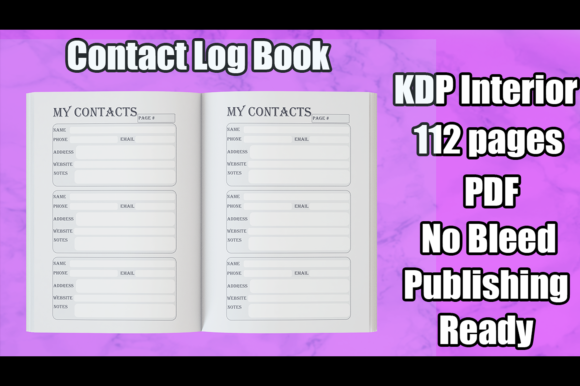
Managing professional and personal relationships requires more than just collecting business cards or saving numbers in a phone. It demands a system that allows for quick retrieval, contextual notes, and reliable organization. For publishers and creators looking to offer a tangible solution to this common problem, a well-structured Contacts Log Book KDP Interior provides immediate value. This specific ready-to-use interior, formatted at 6x9 inches with 112 pages, addresses the practical needs of users who prefer analog organization or a hybrid approach to contact management. The design prioritizes usability over decoration, ensuring that every page serves a functional purpose for entrepreneurs, freelancers, and community organizers.
Optimizing Information Density with Three Contacts Per Page
The layout of a logbook dictates its long-term utility. A common failure in many low-content books is the lack of adequate writing space, which renders the book useless after a few entries. This interior solves that friction point by allocating three contacts per page. This spacing is deliberate. It provides enough vertical room for users to record essential details—name, phone, email, physical address, and social media handles—while leaving significant margin space for contextual notes.
For a real estate agent or insurance broker, the name and number are merely identifiers. The true value lies in the notes: "Prefers text messages," "Met at downtown mixer," or "Interested in commercial properties." By limiting the density to three entries per page, the Contacts Log Book KDP Interior prevents the cramped handwriting and illegible scribbles that often plague smaller organizers. This balance makes the 6x9 trim size highly portable without sacrificing the writing experience. Users can carry it in a briefcase or large pocket, making it accessible during networking events, conferences, or client site visits where digital devices might be intrusive or impractical.
The Strategic Value of the 10-Page Summary Index
A contact list is only as effective as its searchability. Without an index, finding a specific person in a 112-page book becomes a tedious linear search. This interior includes a dedicated 10-page summary section at the front, specifically designed for alphabetical indexing. This feature transforms the notebook from a simple list into a functional reference tool. Users can enter the contact’s name alongside the corresponding page number, creating a custom directory that mirrors the efficiency of digital search functions.
This indexing capability is particularly relevant for professionals who accumulate contacts rapidly. Consider a recruiter attending a multi-day job fair. They may meet fifty candidates in a weekend. By using the summary pages to categorize these new connections immediately, they ensure that follow-up calls on Monday morning are efficient and organized. The ten-page allocation is sufficient for approximately 300 indexed entries, which aligns perfectly with the total capacity of the logbook. This thoughtful inclusion demonstrates an understanding of user workflow, distinguishing this ready-to-use KDP interior from generic notebooks that lack navigational aids.
Target Audience and Practical Use Cases
While anyone can use a contact book, this specific format resonates most strongly with distinct user groups who have unique organizational pain points. Understanding these audiences helps in positioning the product effectively and ensuring it meets genuine market needs.
- Sales Professionals and Realtors: These individuals often work in environments where pulling out a smartphone can signal disinterest or distraction. A physical logbook signals attentiveness. The three-per-page layout allows them to jot down property preferences or budget constraints directly next to the client's contact info, keeping all deal-critical data in one place.
- Educators and Administrators: Teachers managing parent communications or department heads coordinating staff need a reliable backup to digital systems. School networks can go down, and apps can change. A physical log ensures continuity. The index allows them to quickly locate emergency contacts or meeting notes without navigating complex software menus.
- Freelancers and Creatives: Networking is the lifeblood of freelance work. However, creatives often resist rigid CRM software. This logbook offers a tactile, low-pressure way to maintain relationships. The ample note space supports the non-linear way many creatives think, allowing for sketches, project ideas, or reminders to be associated with a specific collaborator.
- Small Business Owners: For local shop owners or service providers, customer relationships are personal. Recording birthdays, anniversaries, or specific preferences (like "allergic to peanuts" or "prefers morning appointments") builds loyalty. This interior facilitates that level of personalized service by providing the space to capture these human details.
Analog Reliability in a Digital-First World
It is important to acknowledge why a physical Contacts Log Book KDP Interior remains relevant despite ubiquitous technology. Digital fatigue is real. Many professionals seek offline alternatives to reduce screen time and improve focus. Furthermore, physical records offer security and permanence that cloud-based solutions cannot guarantee. Accounts get hacked, batteries die, and platforms shut down. A printed book is immune to these vulnerabilities.
However, this format also supports digital workflows rather than replacing them entirely. Many users employ this logbook as a "field capture" device. They collect information in the moment when writing is faster and more polite than typing, then transcribe the data into a master CRM or spreadsheet later. In this hybrid workflow, the quality of the paper and the clarity of the layout become paramount. The 6x9 size is ideal for this transition; it is small enough to serve as a temporary capture tool but substantial enough to act as a permanent archive if the user chooses not to digitize.
Considerations for Publishers and Creators
For those utilizing this ready-to-use KDP interior, understanding the product's specifications ensures better customer satisfaction. The 112-page count is a strategic choice. It keeps the spine width sufficient for legible text while maintaining a slim profile. When marketing or describing this interior, emphasize the functionality of the summary pages. Many buyers overlook interiors that do not explicitly mention indexing capabilities, assuming they will have to draw their own tables.
Publishers should also consider the paper quality implications. While KDP standard color or black-and-white paper is suitable for ballpoint and gel pens, users planning to use markers or fountain pens should be advised about potential bleed-through, especially given the double-sided printing. Recommending appropriate writing instruments in the book’s introduction or description can prevent negative reviews related to paper performance rather than layout design.
Additionally, while this layout is versatile, it is not universal. Users requiring extensive fields for each contact (such as medical history or detailed legal case notes) may find three contacts per page insufficient. Being transparent about the intended use case helps attract the right buyers and reduces returns. This interior excels as a general-purpose relationship manager and networking aid, but it is not a specialized industry compliance log. Clarity in presentation ensures that the product reaches the audience that will derive the most benefit from its specific structure.
Enhancing Professional Presentation and Efficiency
Beyond mere storage, a well-designed contact log enhances professional presentation. Handing someone a sleek, organized book to exchange information projects competence and respect. It suggests that the interaction matters enough to be recorded properly. For marketers and bloggers building personal brands, this subtle signaling reinforces their professional identity.
Efficiency gains also extend to decision-making. When reviewing potential vendors, partners, or hires, having handwritten notes provides context that sterile database entries lack. Seeing the original handwriting and the spatial arrangement of notes can trigger memory recall more effectively than scrolling through a list. This cognitive connection between the physical act of writing and memory retention is a documented psychological phenomenon. By facilitating this process, the Contacts Log Book KDP Interior supports better interpersonal outcomes and stronger relationship maintenance.
Ultimately, the value of this ready-to-use interior lies in its thoughtful architecture. It respects the user's time through efficient indexing, respects their need for detail through generous spacing, and respects their mobility through the 6x9 form factor. Whether used as a primary repository or a supplementary field guide, it offers a reliable, distraction-free method for managing the human connections that drive professional and personal success.