KDP Headache Logbook Migraine Tracker: A Creator’s Guide
Managing chronic pain requires meticulous documentation, and for self-publishers, meeting this need presents a unique business opportunity. The KDP Headache Logbook Migraine Tracker is more than just a notebook; it is a specialized tool designed to bridge the gap between patient care and low-content publishing. For entrepreneurs, marketers, and creators in the health niche, understanding the technical and practical nuances of this specific tracker template is essential for producing a high-quality product that genuinely serves users while adhering to Amazon’s stringent printing standards.
Streamlining Production with Tested PDF Interiors
One of the most significant hurdles in self-publishing functional books is ensuring file compatibility. A common pain point for creators is uploading a manuscript only to have it rejected due to margin errors, bleed issues, or resolution problems. This specific resource addresses that friction directly by providing six PDF interiors that have been explicitly tested on KDP. This pre-validation saves hours of troubleshooting and prevents the frustration of repeated rejections.
For a freelancer or small business owner managing multiple titles, this reliability translates to efficiency. Instead of guessing whether a 6x9 interior will trigger a bleed warning, you can proceed with confidence. The inclusion of ready-for-upload files means the technical heavy lifting is complete, allowing you to focus on keyword research, cover design, and marketing strategy. This is particularly valuable for educators or professionals entering the publishing space who may not possess advanced formatting skills but still demand professional results.
Strategic Flexibility Through Multiple Trim Sizes
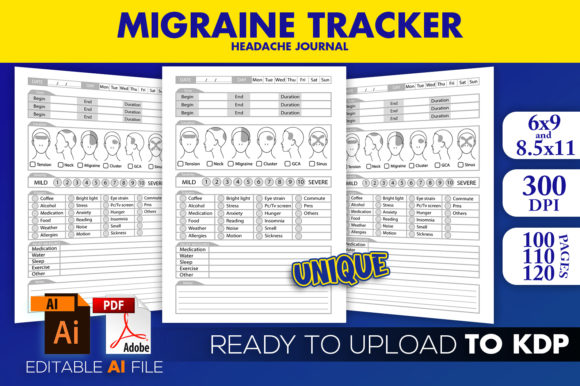
User preferences for health journals vary significantly, and offering a single format can limit your reach. This package supports two distinct trim sizes: 6x9 and 8.5x11. Understanding when to deploy each size is critical for market fit. The 6x9 format is portable and discreet, making it ideal for professionals who need to track symptoms at work or while traveling without drawing attention. It fits easily into a purse or briefcase, supporting consistency in tracking during busy days.
Conversely, the 8.5x11 option caters to users who require ample writing space or have dexterity issues that make smaller formats difficult to use. This larger size is often preferred for home use, detailed symptom analysis, or by caregivers assisting others. By having both sizes available in your download, you can conduct A/B testing to see which format resonates with your specific audience, or create a bundled series that addresses different use cases. This versatility allows publishers to capture a broader segment of the migraine community rather than forcing a one-size-fits-all solution.
Optimizing User Experience with Varied Page Counts
The thickness of a logbook influences both perceived value and practical utility. With options for 100, 110, and 120 pages, creators can tailor their products to specific customer needs. A 100-page book might serve as a quarterly tracker, encouraging users to purchase a new volume every three months, which can support recurring revenue models. It is also lighter and less intimidating for new users just beginning their tracking journey.
On the other hand, a 120-page version offers longevity, potentially covering four to six months of data. For patients working with neurologists who require long-term trend analysis, a thicker book provides the continuity necessary to identify seasonal triggers or medication efficacy over time. When selecting page counts, consider the binding limitations of KDP; these pre-set options are designed to fall within safe manufacturing tolerances, ensuring the spine width calculations remain accurate for your cover design. This attention to detail prevents the misalignment that often plagues amateur publications.
Customization and Branding via Editable Source Files
While ready-made PDFs offer speed, sustainable publishing businesses often require differentiation. The inclusion of editable Adobe Illustrator (AI) source files transforms this from a static template into a flexible foundation. For graphic designers and marketers, this is where true value creation happens. You can modify headers, adjust tracking fields to include specific migraine subtypes, or integrate your own branding elements without rebuilding the layout from scratch.
This capability is vital for avoiding duplicate content penalties on Amazon. If dozens of sellers upload identical interiors, algorithms may suppress visibility. By using the AI files to tweak the design, add unique instructional pages, or customize the aesthetic, you create a distinct product. Furthermore, healthcare providers or coaches looking to create branded resources for clients can adapt these files to include practice logos or specific therapeutic protocols. High-resolution interiors ensure that even after editing, the print quality remains crisp and professional, maintaining trust with end-users who rely on legible records for medical appointments.
Practical Applications for Health Professionals and Coaches
Beyond individual self-publishers, this tracker serves as a practical asset for wellness coaches, nutritionists, and holistic practitioners. These professionals often recommend tracking to clients but struggle to find affordable, comprehensive tools. Using this editable resource, they can produce customized logbooks that align with their specific methodology. For example, a nutritionist focusing on food sensitivities could expand the dietary section of the interior, while a stress management coach might emphasize sleep and mood metrics.
This application extends to employee wellness programs or corporate health initiatives. HR departments or freelancers specializing in corporate wellness can utilize the 8.5x11 format to create desk-friendly reference guides combined with tracking logs. The ability to edit the source file allows for the removal of commercial branding, making it appropriate for internal organizational use. In these contexts, the logbook becomes a communication facilitator, helping employees articulate their health needs more effectively to healthcare providers.
Evaluating Fit and Limitations for Publishers
While the KDP Headache Logbook Migraine Tracker offers substantial advantages, it is important to assess its fit for your specific goals. The editable AI files require access to Adobe Illustrator and a baseline proficiency in vector editing. Creators without this software or skill set will be limited to the pre-made PDFs, which reduces customization potential. Additionally, while the interiors are tested, KDP specifications can change; responsible publishers should always verify current guidelines before finalizing any project.
Furthermore, this resource is a structural foundation, not a complete business solution. Success still depends on external factors like cover design quality, keyword selection, and market demand. Publishers should view this as a high-quality component of a larger strategy rather than a guaranteed income stream. Comparing this option against hiring a custom designer is also wise; for those needing highly specialized medical layouts beyond standard tracking, a bespoke commission might be necessary. However, for general migraine tracking and symptom logging, this package strikes a balance between affordability, quality, and flexibility that is difficult to replicate individually.
Enhancing Patient-Provider Communication
Ultimately, the core value of any migraine tracker lies in its ability to translate subjective pain into objective data. When creators use high-resolution, well-structured interiors, they facilitate better medical outcomes. Clear prompts and organized layouts help users recall details they might otherwise forget during a clinical visit. For the publisher, knowing that the product has been tested for readability and print clarity adds an ethical dimension to the business. You are not just selling paper; you are providing a validated instrument for health advocacy. Whether you are a hobbyist exploring the health niche or a seasoned publisher expanding your catalog, prioritizing functional integrity ensures your contribution remains relevant and helpful to those navigating chronic pain.