80 Cryptograms for KDP Activity Books: Streamlining Your Publishing Workflow
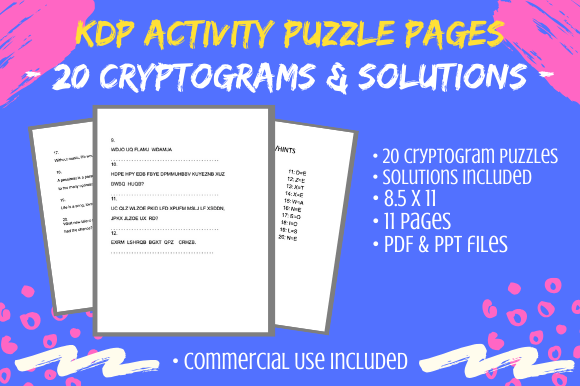
Creating low-content and medium-content books for Amazon KDP requires a balance between creative design and efficient production. For publishers, educators, and entrepreneurs looking to expand their catalog without spending hundreds of hours generating puzzle content from scratch, 80 Cryptograms for KDP Activity Books serves as a foundational asset. This resource is not merely a collection of puzzles; it is a production-ready template system designed to integrate directly into professional publishing workflows. By providing editable PowerPoint files alongside standard PDF interiors, this tool bridges the gap between raw content generation and final book formatting, allowing creators to focus on branding, marketing, and niche differentiation rather than manual data entry.
The Role of Editable Assets in Production Planning
In the context of KDP publishing, time is often the most significant bottleneck. Traditional puzzle creation involves either writing code to generate ciphers or manually encoding phrases, both of which are prone to errors and consume valuable development time. 80 Cryptograms for KDP Activity Books eliminates the initial content creation phase, shifting the workflow from generation to customization. The inclusion of PowerPoint format files is the critical differentiator here. Unlike static PDFs that require expensive graphic design software to modify, PPT files allow users to leverage familiar interface tools to rearrange layouts, adjust font sizes, and swap graphics.
This accessibility impacts the planning stage significantly. Before committing to a full print run or digital launch, creators can rapidly prototype different interior styles. You might test a minimalist aesthetic for a senior demographic in one version and a vibrant, illustrated style for a younger audience in another, all using the same core puzzle set. This flexibility supports A/B testing of book concepts without requiring additional content investment. The 50-page structure with bleed settings already configured means technical specifications are handled upfront, reducing the likelihood of rejection during the KDP upload review process.
Integrating Puzzles into Broader Creative Projects
While primarily designed for standalone activity books, these cryptogram templates function effectively as modular components within larger projects. Educators developing curriculum supplements can extract specific puzzles to reinforce vocabulary lessons. Marketers creating lead magnets can compile a selection of puzzles into a branded PDF to drive email list signups. Freelancers offering gig services can use the editable files to fulfill custom puzzle book orders more efficiently, increasing profit margins by reducing labor hours per deliverable.
The interaction between this resource and other design tools is seamless. Because the source files are in PowerPoint, they maintain compatibility with a wide ecosystem of plugins and add-ons. Users can import vector graphics from external libraries, apply consistent color palettes defined in their brand guidelines, or utilize typography that matches their existing product line. This interoperability ensures that the puzzles do not look like generic stock content but rather appear as bespoke elements tailored to a specific brand identity. The ability to edit the format to suit individual design sensibilities transforms a standardized product into a unique intellectual property.
Execution: Customization and Quality Control
Owning the asset is only the first step; successful implementation relies on rigorous customization and quality assurance. When working with 80 Cryptograms for KDP Activity Books, treat the provided content as a draft rather than a final product. The solutions and hints included are essential for verification, but creators should implement a multi-stage review process. Even professionally prepared templates can contain anomalies when fonts or spacing are adjusted during the customization phase.
- Font Compatibility Check: Ensure that any new fonts added during embellishment remain legible at the intended print size. Cryptograms rely heavily on clear character distinction; ornate scripts can reduce usability and lead to negative reviews.
- Bleed and Margin Verification: Although the 8.5×11 inch dimensions include bleed settings, adding custom graphics near the edges requires re-verification. Always export a test PDF and measure safe zones physically or digitally before final submission.
- Solution Key Accuracy: If you alter the order of puzzles or modify the encoded text to fit a specific niche theme, you must update the solution pages simultaneously. Discrepancies between puzzles and answers are the primary cause of returns in the activity book category.
- Visual Hierarchy Assessment: Use the editing capability to establish a consistent visual rhythm. Ensure that headers, page numbers, and hint sections appear in identical locations across spreads to enhance the user experience.
Efficiency in execution also comes from batching tasks. Rather than designing one book at a time, use the master PPT file to create a "style master" that contains your preferred fonts, background textures, and logo placements. Duplicate this master for each new project to maintain consistency across a series. This approach reduces decision fatigue and accelerates the production timeline, allowing for the release of multiple titles within a single quarter.
Strategic Embellishment and Market Differentiation
The market for cryptogram books is competitive, and differentiation is necessary for visibility. The instruction to "embellish with your own graphics" is a strategic directive. Plain text puzzles are commodities; themed experiences are products. Utilizing the editable nature of these files allows for deep thematic integration. A puzzle book targeted at gardeners should feature botanical illustrations intertwined with the cipher grids. A volume for history buffs might use parchment textures and serif typefaces. These visual cues signal relevance to potential buyers browsing thumbnail images on Amazon.
Furthermore, the cover design plays an outsized role in conversion. While the interior provides the substance, the cover drives the click. The PPT format allows creators to pull interior elements directly onto the cover, ensuring visual cohesion between the exterior promise and the interior delivery. This consistency builds trust and reinforces brand recognition. Sellers should view the 80 puzzles not as a limit, but as a canvas. Adding introductory pages, difficulty ratings, or personal notes from the author can increase perceived value and justify higher price points.
Long-Term Asset Management and Scalability
Sustainable publishing businesses rely on reusable assets. 80 Cryptograms for KDP Activity Books should be organized within a broader digital asset management system. Tag the master files with metadata regarding theme, difficulty level, and publication status. This organization facilitates future updates or expansions. If a particular title performs well, having the source files readily accessible allows for quick creation of sequels or spin-offs without restarting the design process.
Consider the licensing and usage rights associated with the product. Understanding whether you can resell the modified files or only the finished compiled books is crucial for business modeling. Most KDP-focused assets permit the sale of finished products but restrict the resale of the editable templates themselves. Adhering to these terms protects your account standing and ensures ethical business practices. Additionally, keeping track of which puzzles have been used in which publications prevents accidental duplication across your own catalog, maintaining freshness for repeat customers.
For freelancers and agencies, this resource also serves as a training tool. New designers can learn the structural requirements of KDP interiors by working within a pre-formatted framework. They can practice layout adjustments and typographic hierarchy without the pressure of building a document from zero. This reduces onboarding time and establishes a baseline quality standard for team-produced work. Over time, the efficiencies gained from using such structured resources compound, freeing up mental bandwidth for higher-level strategy, keyword research, and advertising optimization.
Practical Considerations for Diverse User Groups
Different users will derive value from this resource in distinct ways. Hobbyists may appreciate the low barrier to entry, allowing them to create gifts or personal projects without learning complex software. Small business owners might use the books as corporate giveaways or client appreciation tokens, customizing the messages to reflect company values. Educators can adapt the difficulty levels to match student proficiency, using the hints feature as a scaffolding tool for learners who need extra support.
Regardless of the end goal, the underlying principle remains the same: leverage existing infrastructure to accelerate creation. The 50-page count is optimized for standard printing costs while providing sufficient content to satisfy users. The inclusion of both PDF and PPT formats respects the varying technical capabilities of the user base. Those comfortable with advanced design software can convert the PPT to other formats if needed, while those preferring simplicity can stay entirely within the Microsoft ecosystem. This versatility makes 80 Cryptograms for KDP Activity Books a pragmatic choice for anyone serious about integrating puzzle content into their product offerings or creative routines.
Ultimately, success in activity book publishing depends on the intersection of quality content and operational efficiency. By utilizing editable, pre-formatted resources, creators can bypass the tedious aspects of production and dedicate their energy to what truly matters: understanding their audience and delivering a superior user experience. Whether used as a standalone product line or a supplementary element in a larger educational or marketing strategy, these cryptogram templates provide a reliable foundation for scalable, high-quality output.