Day Planner KDP Interior: Selecting Formats and Sizes for Low-Content Publishing
The low-content publishing market on Amazon has evolved significantly, moving beyond simple lined notebooks to highly functional tools that serve specific daily needs. Among these, the Day Planner KDP Interior stands out as a perennial bestseller because it addresses a universal pain point: time management. For creators and publishers, success in this niche depends less on artistic flair and more on technical precision and user-centric design. Understanding the nuances of file formats, trim sizes, and page counts is essential for producing a planner that customers actually want to use rather than just buy.
When developing a Day planner 100 pages interior for KDP products, publishers must balance production costs with perceived value. A 100-page count is often considered the sweet spot for undated or quarterly planners. It provides enough bulk to feel substantial in the hand without driving printing costs so high that profit margins evaporate. However, the physical utility of these pages is dictated entirely by the trim size selected. The choice between 6x9 inch and 8.5x11 inch formats is not merely aesthetic; it fundamentally changes how the end-user interacts with the product.
Evaluating Trim Sizes Based on User Behavior
Selecting the correct dimensions requires empathy for the customer's lifestyle. Both 6x9 and 8.5x11 sizes have distinct advantages depending on where and how the planner will be utilized.
The Portability of 6x9 Inch Planners
The 6x9 inch format is widely regarded as the industry standard for personal organization. Its primary strength lies in portability. This size fits comfortably into most handbags, backpacks, and even large coat pockets. For professionals who are frequently mobile, such as real estate agents, nurses, or field technicians, a bulky planner is a hindrance. A 6x9 Day Planner KDP Interior allows for quick reference and logging while standing or commuting.
However, the compact nature of this size imposes design constraints. With a smaller canvas, horizontal space is limited. Publishers must ensure that writing prompts, hourly schedules, and note sections remain legible without feeling cramped. Margins must be carefully calculated to account for the gutter (the inner binding margin), ensuring users do not have to break the spine to write near the center of the book. Despite these challenges, the 6x9 size remains the highest-volume category due to its convenience factor.
The Utility of 8.5x11 Inch Planners
In contrast, the 8.5x11 inch format serves a different demographic. This size mirrors standard letter paper, making it ideal for desk-bound professionals, students, and individuals who require extensive writing space. Teachers, project managers, and those using the planner as a primary journaling tool often prefer this larger format. The additional surface area allows for more detailed daily breakdowns, larger goal-setting sections, and integrated habit trackers that would be illegible in a smaller book.
From a design perspective, the 8.5x11 size offers greater creative freedom. It accommodates dual-page spreads more effectively, allowing for weekly overviews or complex productivity matrices like the Eisenhower Box. While less portable, its presence on a desk acts as a visual cue for productivity. Publishers targeting this segment should focus on maximizing whitespace and readability, as customers buying this size expect a premium, uncluttered experience.
Technical Specifications: PDF vs. JPG Interiors
A critical decision in the creation process involves the file format of the interior. While Amazon KDP accepts various formats, understanding the distinction between PDF and JPG is vital for print quality and file management.
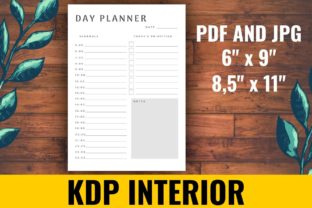
- PDF Format: Portable Document Format is generally the preferred standard for text-heavy or vector-based interiors. PDFs preserve crisp lines, sharp typography, and exact positioning regardless of the device used to view them. For a Day planner 100 pages interior for KDP products, PDF ensures that grid lines and text remain razor-sharp during printing. It also supports embedded fonts, preventing substitution errors that could ruin the layout.
- JPG Format: JPEG images are raster-based and can be useful for highly illustrated covers or artistic interiors. However, using JPG for a full planner interior carries risks. Compression artifacts can make lines appear fuzzy or pixelated. Furthermore, managing 100 individual JPG files is cumbersome compared to a single multi-page PDF. If JPG is necessary for specific graphical elements, they should be exported at a minimum of 300 DPI to maintain print fidelity.
For most functional planners, a high-resolution PDF is the superior choice. It streamlines the upload process and guarantees consistent output. Publishers should always preview their files using KDP’s online previewer before approving, checking specifically for margin warnings and image clarity.
Designing for Functionality Over Novelty
The market is saturated with generic planners. To create a viable product, one must move beyond basic dated lines and consider the cognitive load of the user. A successful Day Planner KDP Interior anticipates how people actually plan their days, rather than how they wish they planned them.
- Prioritization Sections: Modern productivity emphasizes doing fewer things better. Including a "Top 3 Priorities" section helps users distinguish urgent tasks from important ones.
- Hybrid Layouts: Combining structured hourly blocks with open-ended note space caters to both time-blockers and free-form thinkers.
- Reflection Prompts: Small sections for end-of-day review or gratitude can increase user retention and satisfaction, transforming a simple scheduler into a mindfulness tool.
- Undated Flexibility: Many users abandon planners after missing a few days. Undated 100-page interiors eliminate the guilt of wasted pages, extending the product's usable lifespan and reducing returns.
When designing these elements, consistency is key. Headers, fonts, and line weights should remain uniform throughout the 100 pages. Visual noise distracts from the planner’s purpose. The goal is to create a frictionless interface between thought and paper.
Practical Considerations and Limitations
While KDP offers an accessible entry point, publishers must manage expectations regarding physical production. Standard color printing on KDP uses 55# (90 GSM) white paper. This is adequate for ballpoint pens and pencils but may bleed through with gel pens or markers. Designers should avoid heavy ink coverage or solid black backgrounds inside the planner to prevent show-through and keep printing costs manageable.
Additionally, the 100-page count, while economical, limits the scope of the planner. It is insufficient for a full-year daily planner unless the font size is reduced to impractical levels. Publishers should clearly communicate the duration and intended use in the book description. Positioning a 100-page book as a "90-Day Focus Planner" or "Quarterly Goal Tracker" aligns customer expectations with the physical reality of the product.
Another consideration is the binding. KDP paperback perfect binding requires a minimum page count for text to appear on the spine. A 100-page book meets this requirement, allowing for professional shelf presentation. However, the book will not lay flat when opened. Designers must account for this by providing generous inner margins (gutters), typically adding 0.375 inches to 0.5 inches depending on the total page count, to ensure content is not swallowed by the binding.
Matching Product to Audience Needs
Ultimately, the viability of a Day Planner KDP Interior depends on alignment between format and audience. Before finalizing a design, publishers should ask targeted questions:
- Is the target user mobile or stationary? (Dictates 6x9 vs. 8.5x11)
- Does the user need archival quality or disposable utility? (Influences paper and cover finish choices)
- Is the planner meant for tracking appointments or processing thoughts? (Determines layout structure)
- Will the user benefit from digital compatibility? (Suggests inclusion of QR codes or downloadable supplements)
By treating the planner as a solution to a specific problem rather than a generic commodity, publishers can create products that stand out in search results and earn positive reviews. The combination of appropriate sizing, clean technical execution in PDF format, and thoughtful page architecture creates a product that respects the user's time and intentions.
Creating a successful planner on KDP is an exercise in user experience design. Whether opting for the portable 6x9 inch format or the expansive 8.5x11 inch version, and whether delivering via PDF or high-res JPG, the core objective remains the same: facilitating order in a chaotic world. When the technical specifications align seamlessly with human needs, the resulting Day planner 100 pages interior for KDP products becomes more than just paper and ink; it becomes an indispensable tool for daily living.